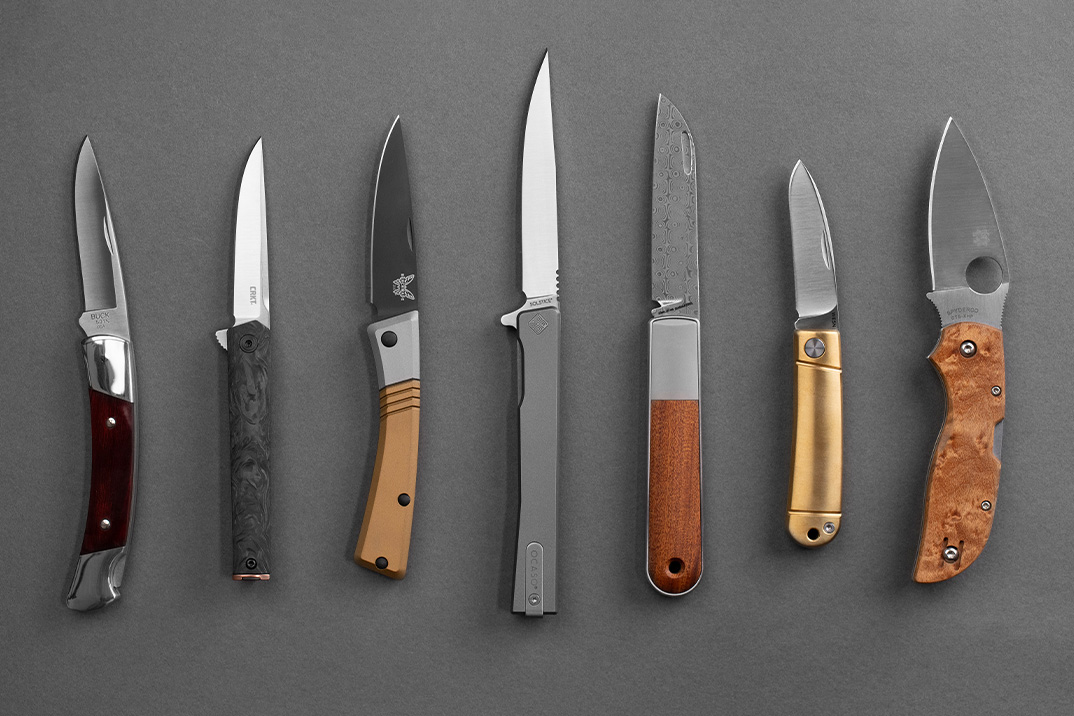

The original “pen knife” earned its name doing one thing really well. It was built entirely for trimming and sharpening the quill pens that every literate man relied on. For centuries after, a small, elegant folding knife was simply part of being dressed, and it was really just as expected in a gentleman’s pocket as a watch on his wrist. Washington carried one. Lincoln carried one. And your grandfather almost certainly carried one.
Then, somewhere between the ’90s mall-ninja boom and the tactical arms race that followed, the pocket knife started to get really aggressive. And while those blacked out blades and chunky handles are great for job sites and workshops, they’re not always the best choice for slicing an apple at your desk or opening a package in the studio.
That’s exactly the gap the gentleman’s knife fills, and right now feels like the category is in the middle of a renaissance. The formula here is simple: slim profiles, premium materials like walnut, brass, and titanium, restrained blades, and a presence that puts people at ease rather than on edge.
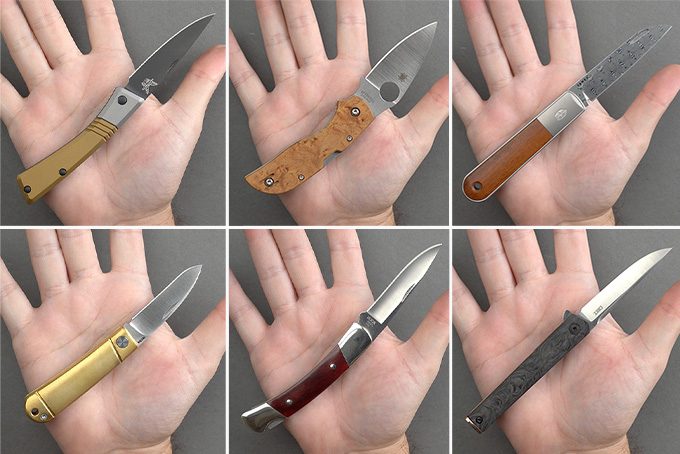
For this guide, we prioritized knives you can carry anywhere reasonable people gather. We’re talking offices, restaurants, dinner parties, and so on.
So without further ado, let’s get into our guide of the best gentleman’s knives for everyday carry.
Video Review: The Best Gentleman’s EDC Knives
If you’re looking to take a deeper into the world of these sophisticated folders, be sure to check out our best gentleman’s EDC knives video review – in all its 4K glory.
Opinel No. 8 Walnut
Why It Made The Cut
- The same knife French shepherds have carried since 1890, dressed up in walnut and suddenly welcome at the dinner table for just $30.
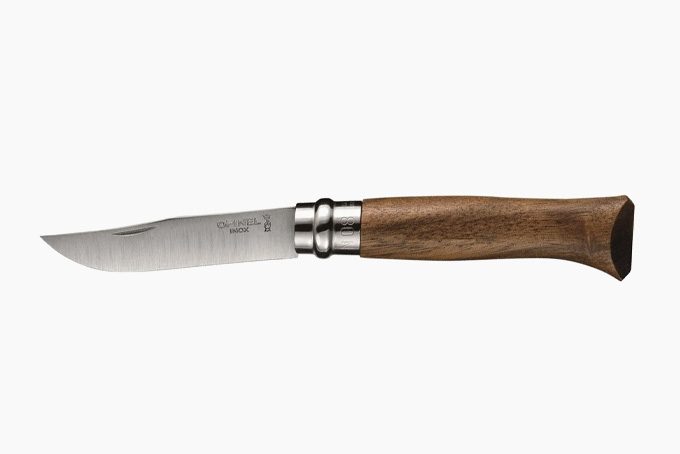
Alright, we’ll address it right up front: a French farmer’s knife is a pretty unusual way to kick off a gentleman’s knife guide. Joseph Opinel designed the No. 8 in 1890 for the vineyard workers and shepherds of Savoie, but this particular version earns its seat at the table.
The inclusion here for us all about the handle. Swapping the standard-issue beech for French walnut, it’s darker, richer, and with real figure in the grain, it really does transform the humble picnic knife into something you can pull out at a dinner party without a second thought.
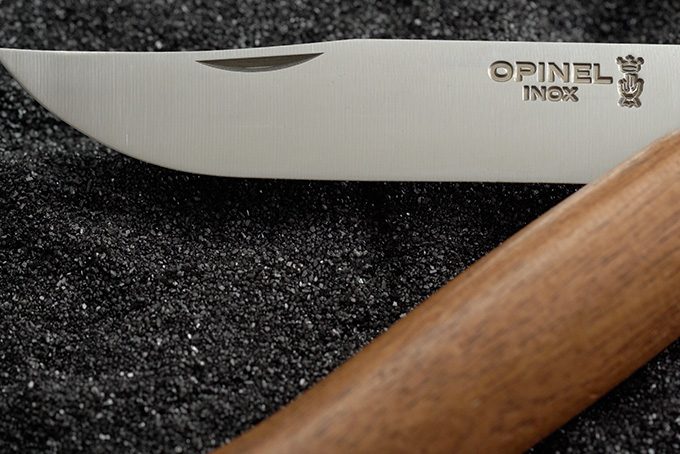
And the pedigree was always there anyway. In fact, Picasso even carved sculptures with an Opinel.
The 3.3-inch Yatagan-profile blade is Opinel’s modified Sandvik 12C27 stainless, and at roughly 2mm at the spine, it’s thinner than nearly any production folder on the market. It’s got pretty decent slicing performance, and edge retention is middling by most modern-day standards, but a few minutes on a stone brings it right back to being scary sharp.
Deployment here is slow, but it’s by design. Simply pinch the nail nick, draw the blade out with two hands, then twist the Virobloc collar (a 1955 addition, we might add) to lock the blade open. And twisted the other way, it locks the blade closed in your pocket.
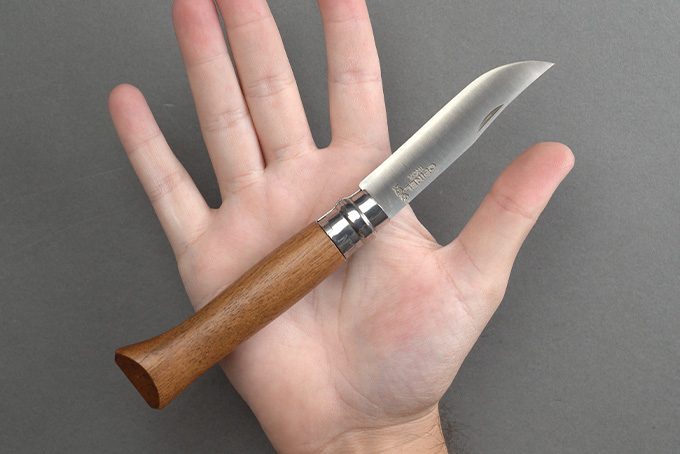
It’s worth noting that there’s no clip, no choil, and the wood can swell in humid weather until the blade sticks shut. Of course, the traditional fix is the coup du savoyard, which is simply hitting the handle butt against a solid surface to slightly pop the blade out. Now, whether that’s a flaw or a ritual, probably depends entirely on the owner.
At around $30, and still made in Chambéry, France, this is the oldest design on this guide by a wide margin, and the cheapest way here to carry something with some real history.
Blade Length: 3.3″
Blade Steel: Sandvik 12C27 Stainless
Overall Length: 7.59″
Weight: 1.6 oz
Lock Type: Virobloc Collar Lock
CRKT CEO Compact
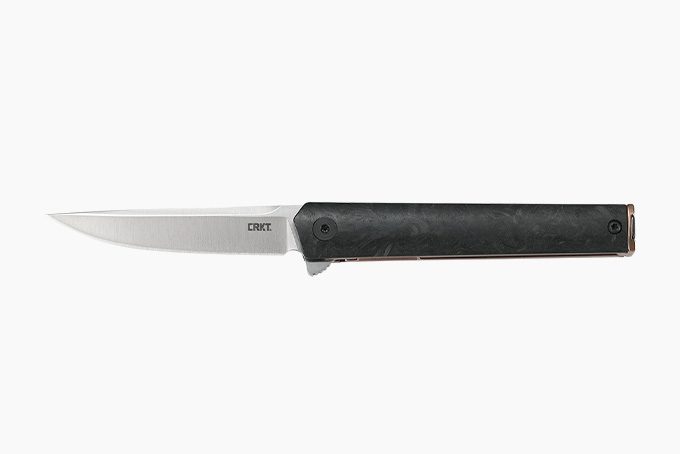
When Richard Rogers’ original CEO dropped back in 2019, it became a runaway hit for CRKT, and it’s a hard knife not to love. It features a plain deep-carry clip with no logo, a blade that sits flush in the handle, and a silhouette that feels more akin to office supply than it does cutlery.
The Compact seen here takes that formula, shrinks it, and finally gives it the materials it deserved. We’re talking a satin S35VN blade, marbled carbon fiber scales, and copper-washed liners that flash warm when the light catches the seam.
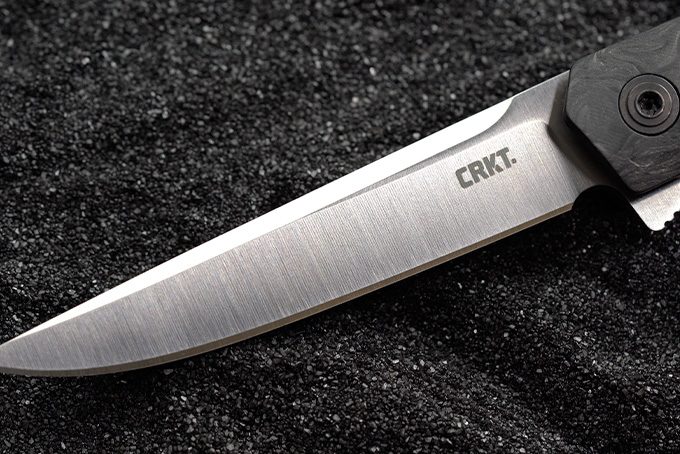
This is a minimalist, slim profile knife through and through. A 2.62-inch straight-back blade, that measures in at 3.57 inches closed, and weighs just 1.7 ounces all in.
Getting a blade this light to flip well can be a bit of a challenge, since there’s no mass to carry it through the detent. CRKT nailed it anyway. The flipper tab and IKBS bearings produce a deployment so snappy that this thing quickly turns into a fidget tool every time we pull it out to cut something.
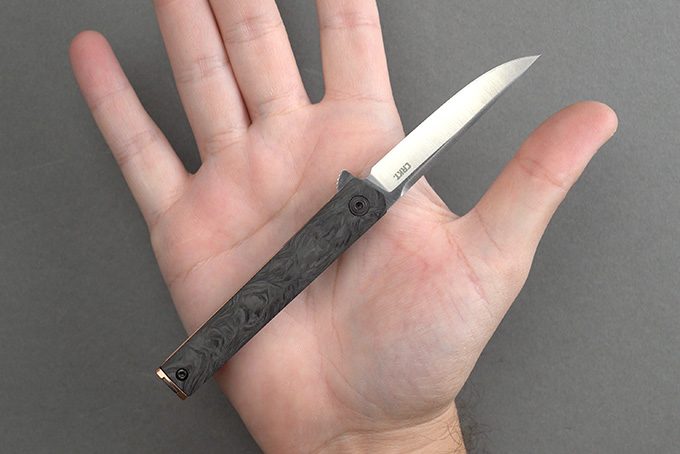
Fair warning on the trade-offs though: the pen-thin handle offers nothing to brace against for forceful cuts, the squared-off butt corners could be improved with some rounding, and the narrow blade can bind in dense cardboard (we’ve experienced this a few times breaking down larger boxes in the studio).
But for letters, opening packages, and cutting fruit like apples, this is a great little blade. And it says so right in the name.
Blade Length: 2.62″
Blade Steel: CPM S35VN
Overall Length: 6.19″
Weight: 1.7 oz
Lock Type: Liner Lock
The James Brand The Wayland
Why It Made The Cut
- The James Brand catches plenty of flak online, but this Damasteel-bladed modern Barlow is the knife that may have quieted the comment section.
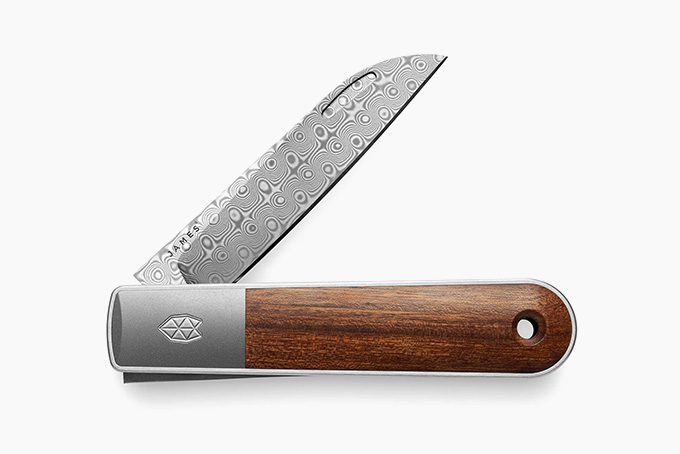
Long bolster, teardrop handle, and a sheepsfoot blade: that’s the classic Barlow in a nutshell. It’s a pattern born in Sheffield over three centuries ago, and it’s gone to become the great American pocket knife. Washington carried one, Lincoln carried one, and Mark Twain even wrote one into Tom Sawyer. The Wayland is The James Brand’s attempt to bring that classic silhouette into the present, and it’s the knife that finally won over a lot of people who’d written the brand off.
Because yes, we know the discourse. Knife forums love criticizing The James Brand: too much marketing, too much hipster, too much money for Chinese manufacture, and so on. And we get it. But having handled one, we’ll tell you the Wayland definitely breaks the mold, and fits the bill for this guide perfectly.
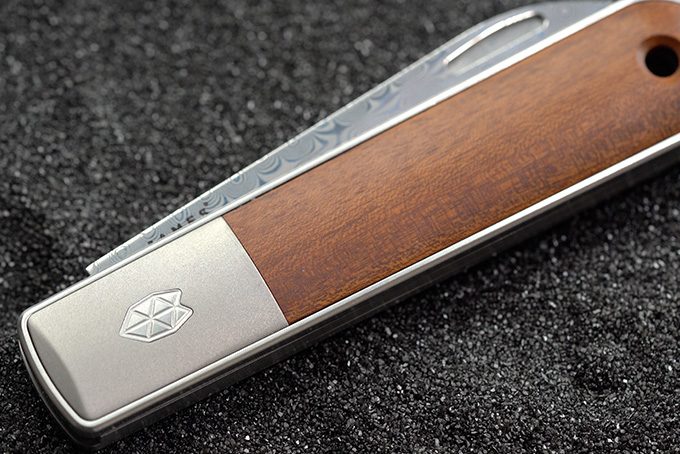
The proportions are dead-on, there’s zero visible hardware anywhere on the knife, and the titanium bolsters meet the wood in a way the photos really undersell. In person, this is a really beautiful knife.
It features rosewood scales under a blade of Damasteel’s Rose DS93X. That’s the Swedish powder-metallurgy stainless damascus, with rosette patterning that shifts as the blade moves through light.
It’s a true slip joint with a firm pull, a solid half stop, and crisp action riding on phosphor bronze washers. The three-inch blade’s spine tapers toward the tip just enough that the traditional crowd has formally ruled it a lambsfoot rather than the sheepsfoot The James Brand calls it.
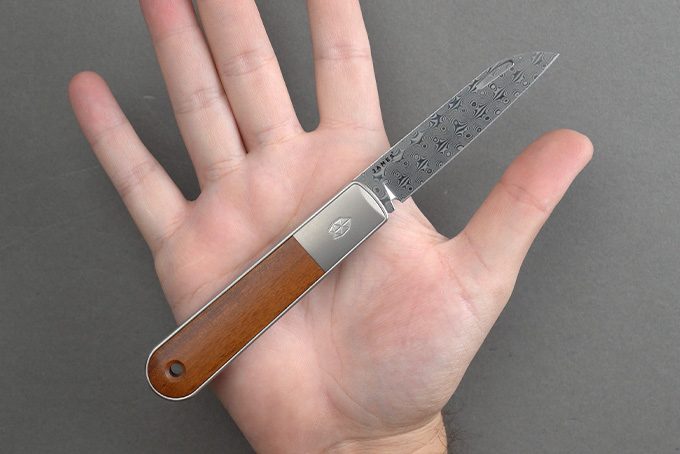
At 2.8 ounces and 6.9 inches overall, it carries really nicely, with a lanyard tube if you swing that way.
With all that being said, we understand the real criticism that $299 is real money for a Chinese-built slipjoint, but if you don’t mind paying the premium, it’s a gorgeous EDC knife that gets a ton of compliments every time you pull it out.
Blade Length: 3.0″
Blade Steel: Damasteel DS93X
Overall Length: 6.9″
Weight: 2.8 oz
Lock Type: Slip Joint (Non-Locking)
Ocaso Solstice
Why It Made The Cut
- Andrew Demko usually designs knives that get hammered through car hoods, but the Solstice is what happens when he designs for dinner parties instead.
Andrew Demko made his name designing knives that get batoned through lumber and driven through car hoods in Cold Steel’s infamous proof videos. He’s the inventor of Cold Steel’s famously indestructible Tri-Ad lock and the designer behind the AD series, which are some of the hardest-use folding knives ever put into production.
Now, the Solstice seen here, is what happens when that same guy designs for the dinner party instead.
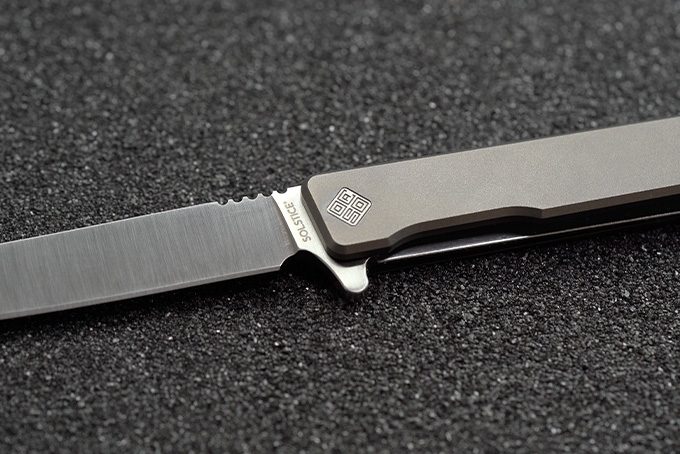
Of course, the backstory runs deeper than just one designer. Ocaso was founded by Ric Valdez, who spent two decades at Cold Steel and left the EVP chair to build essentially its spiritual opposite: Ocaso. It’s a brand named after the Spanish word for sunset, which is a nod to the famous pink-moment light of its home in Ojai – which is just outside of our Los Angeles backyard.
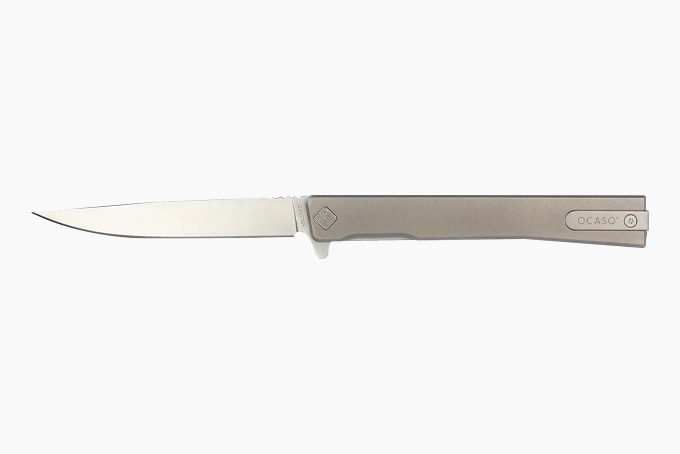
Conceptually, this is the same pen-in-the-pocket play as our CEO Compact, but it’s executed through a more premium lens. The handle is solid aerospace-grade titanium, machined into one long clean taper, and the 3.5-inch straight-back blade is American CPM S35VN run to 60-61 HRC with a full flat grind and satin finish. That’s nearly an inch more cutting edge than the CRKT.
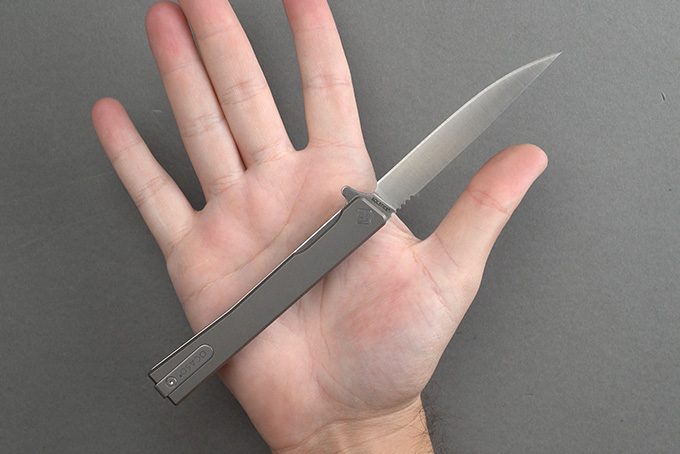
A flipper tab and caged stainless bearings send the blade out almost too fast to see, and it’s another one of those actions that’ll have you flicking it open non-stop. It’s equipped with a liner lock, firm detent, and a deep-carry fold-over clip with all the hardware concealed.
The honest caveat with any knife this slim and this light gives you little to grip when a cut needs real force.
At $230, it’s double the CEO Compact’s price, but hold them both and you’ll understand exactly where the money went.
Blade Length: 3.5″
Blade Steel: CPM S35VN
Overall Length: 7.8″
Weight: 2.5 oz
Lock Type: Liner Lock
Buck 501 Squire
Why It Made The Cut
- Think of it as the legendary Buck 110 shrunk down for pocket duty, leather sheath included, still made in the USA for $80.
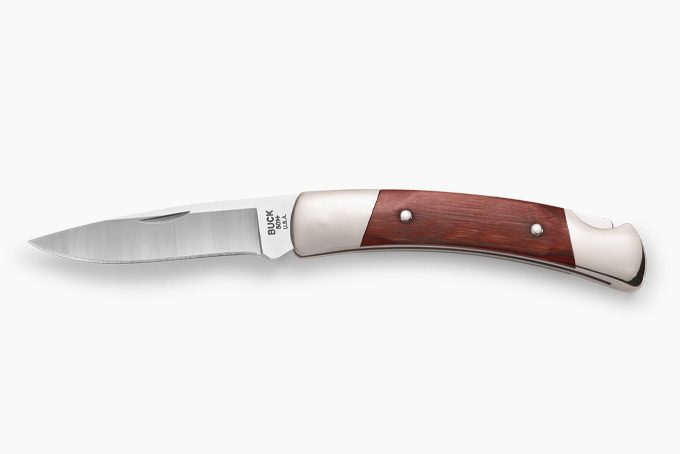
When Buck introduced the 110 Folding Hunter in 1963, it invented the modern lockback and has sold millions of them ever since. It also weighs over seven ounces and rides a belt like a small anvil, which is exactly why the 501 Squire exists. It takes the 110’s whole design language, and shrunk it into a much more pocketable EDC knife.
The Squire swaps the 110’s clip point for a 2.75-inch drop point in Buck’s 420HC, hollow ground thin behind the edge, with resin-stabilized rosewood-hued scales and nickel silver bolsters that patina handsomely over years of carry.
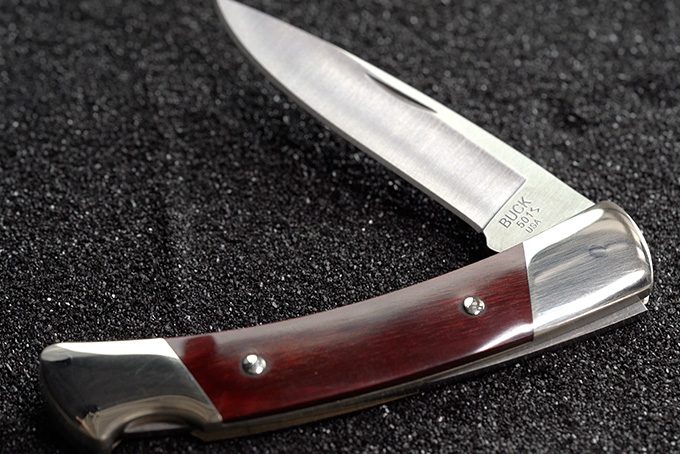
The knife does still keep things traditional though, featuring a lockback spine and a nail nick opening. It’s very much still a two-hand affair, and there’s no clip and no bearings.
The knife features 420HC, and we understand the criticism you’ll find across the forums and comment sections. But Buck’s legendary Paul Bos heat treat runs it to 58 HRC and wrings more performance out of this alloy than any other brand in the space. It holds a solid working edge.
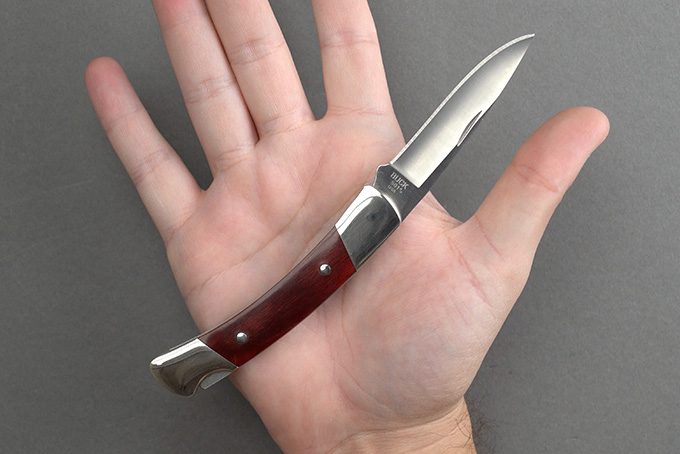
At 3.75 inches closed and under three ounces, it also pockets nicely, and Buck even includes a really supple leather belt sheath, making this one of only two knives on this guide that ship with one.
Now, it is worth mentioning that you can go down a bit of rabbit hole with this knife as Buck’s custom shop will build your 501 with MagnaCut, elk or stag scales, and even put your name on the blade – all at a decent price too.
Made in Post Falls, Idaho, backed by the Forever Warranty, and the most affordable American-made knife on this guide, Buck just doesn’t miss with these.
Blade Length: 2.75″
Blade Steel: 420HC Stainless
Overall Length: 6.5″
Weight: 3.0 oz
Lock Type: Lockback
Böker Fructis
Why It Made The Cut
- It puts French custom maker Stéphane Espi’s signature front-flipper action at a price normal humans can actually justify.
Böker’s Plus line has a simple premise: find talented custom makers around the world, put their designs into production, and sell them for a fraction of what the handmade originals command.
The Fructis comes from Stéphane Espi, a self-taught knifemaker working in the South of France with two decades of experience. Espi has a shelf full of Paris knife show awards, and his lowercase signature sits right on the blade like a painter’s mark.
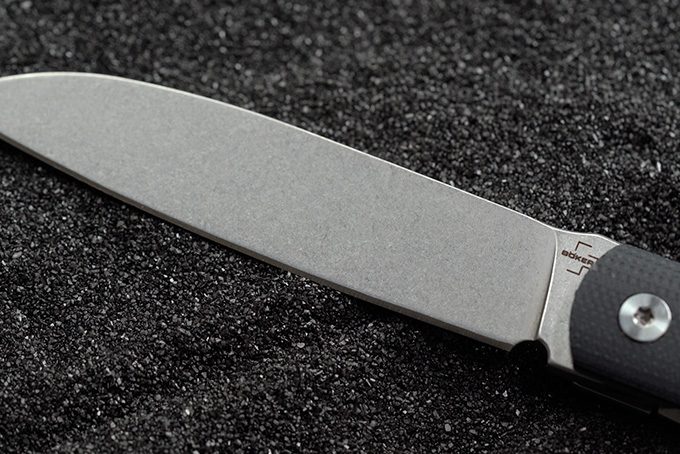
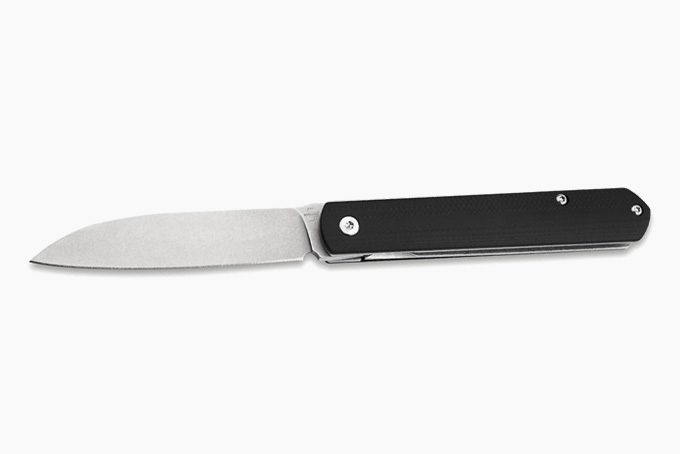
The knife itself is a 3.15-inch stonewashed sheepsfoot over clean black G10, with a name that’s inspired by the humble fruit knife. Böker runs with the bit, calling it a vitamin boost for your everyday carry.
The steel here is Nitro-V, which is essentially AEB-L razor steel enhanced with nitrogen and vanadium. This all translates into a fine, stable edge that sharpens easily and shrugs off corrosion. Among budget steels, it’s actually favored by people who like to sharpen their own knives.
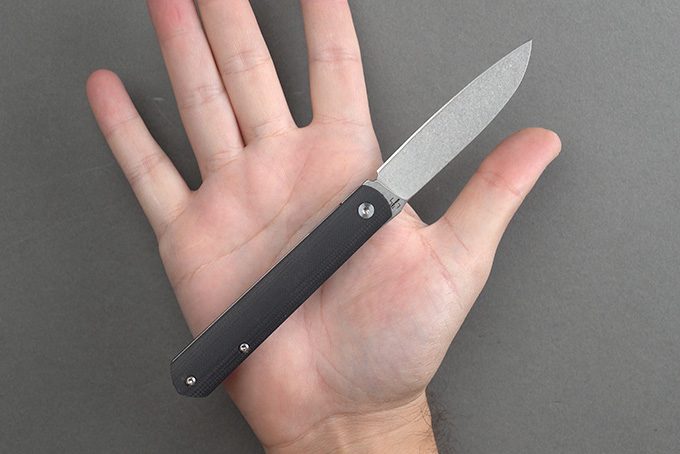
The knife utilizes a front flipper deployment, and instead of a rear tab, there’s a subtle nub peeking from the spine that you sweep with your thumb. There is a bit of a learning curve, but once the motion clicks, the ball-bearing pivot is quite satisfying to use.
At 2.65 ounces with nearly four inches of handle, it fills the hand better than our pen-style picks while still staying slim. It also features a liner lock, and deep-carry tip-up clip.
The Opinel proved the French understand simple knives. The Fructis, which just dropped this past spring, proves they still do.
Blade Length: 3.15″
Blade Steel: Nitro-V
Overall Length: 7.09″
Weight: 2.65 oz
Lock Type: Liner Lock
Spyderco Chaparral Birdseye Maple
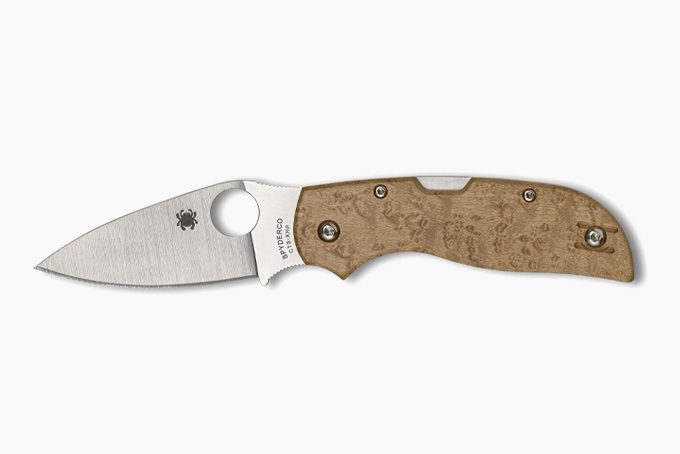
Why It Made The Cut
- This is Spyderco’s refined side, wearing birdseye maple figuring that guarantees no two examples on earth look quite alike.
We carry a Paramilitary 2 almost daily, but we’d never try to pass it off as a gentleman’s knife. Parked next to the Chaparral, it feels pretty tactical. This series, however, is Spyderco’s softer side, if you will.
It’s one compact, refined platform re-released over the years in rotating premium handle materials, from carbon fiber to stepped titanium, and now this.
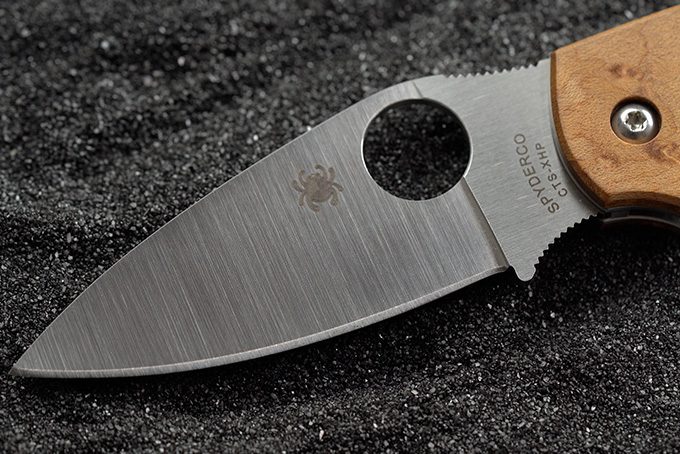
Birdseye maple might be our favorite release of the run. The figuring is unique to every single knife, and the polished finish catches light beautifully. Spyderco even ships it sealed in plastic to protect the wood from humidity swings in transit.
Here’s the thing those pretty scales hide: the Chaparral is still very much a performance piece. The 2.8-inch leaf-shaped blade is ground from roughly 2mm stock with a full flat grind, which makes it a really solid slicer.
Spyderco’s trademark round hole gives you one-handed opening without too much aggression, and there’s a textured choil for choked-up control. The back lock also uses a hidden pin arrangement for zero vertical play. The fit and finish borders on flawless across the board for this knife.
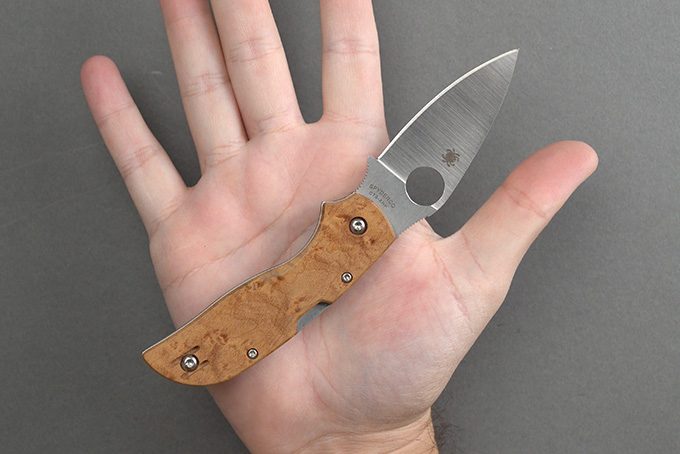
At 2.1 ounces with a reversible deep-carry wire clip, it’s a really nice daily carry blade.
Now a few quick notes of caution. Because it’s wood, you’ll want to keep it dry, and the wire clip can hot-spot under hard pressure.
Spyderco also builds this exact knife as a non-locking SLIPIT for lock-restricted jurisdictions. Either way, for a brand that tends to skew more tactical, this feels like heirloom territory.
Blade Length: 2.8″
Blade Steel: CTS XHP
Overall Length: 6.35″
Weight: 2.1 oz
Lock Type: Back Lock
WESN The Henry
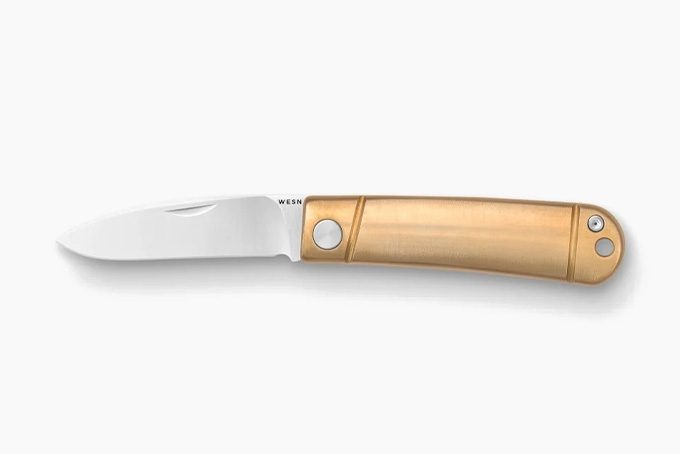
Why It Made The Cut
- Modeled after the founder’s grandfather’s Swedish slip joint, the brass Henry only gets better looking the longer you carry it.
A few years back, WESN founder Billy Chester was sorting through his late grandfather’s belongings when he came across an old Swedish slip joint. Turns out, it was the knife the man had carried his whole life.
That discovery ultimately ended up becoming a design brief. The Detroit micro-brand built its own tribute to that Scandinavian tradition, and gave it his grandfather’s name: the Henry.
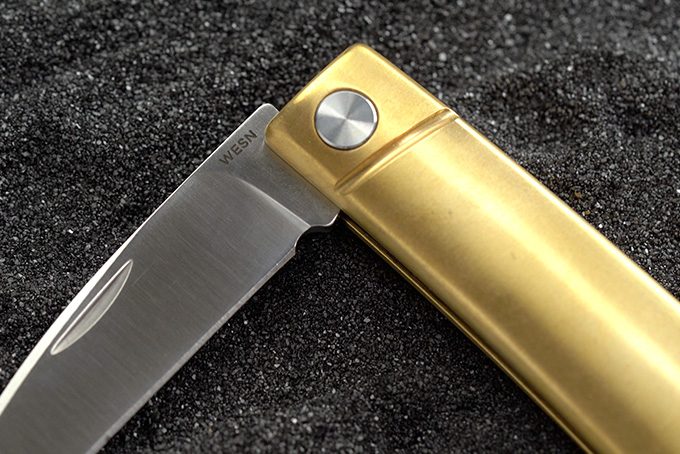
WESN kept all of the details honest to tradition including a nail nick, half stop, lanyard hole, and not a bearing or pocket clip in sight.
The brass version is the one that truly completes the idea. It’s made from solid slabs of brass, warm and unlacquered, just begging for a beautiful patina. WESN even goes as far to call it an instant heirloom.
The 2.35-inch drop point is Swedish Sandvik 12C27, which means easy sharpening and a clean, fine edge.
The slip joint action has some real spring to it. The pull lands firmly at a half stop, then snaps open and shut nicely. The resistance can feel a bit intimidating for the first week, but you adjust quickly, and it’s nice knowing the blade will be kept exactly where you put it.
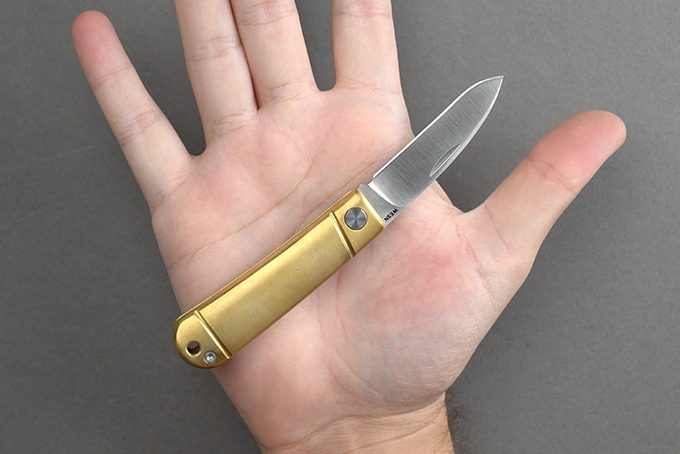
At 3.72 ounces, this three-inch-closed knife outweighs the much larger Wayland. Brass is obviously pretty dense, and in the hand that density does feel like quality. The heft of this knife feels really good when you pull it out of your pocket or lay it on your desk.
And we’d argue that nothing else on this guide will look better in twenty years than it does today.
Blade Length: 2.35″
Blade Steel: Sandvik 12C27 Stainless
Overall Length: 5.35″
Weight: 3.72 oz
Lock Type: Slip Joint (Non-Locking)
Terrain 365 Otter Slip Flip-AT Ti
Why It Made The Cut
- There’s zero steel in this blade, which makes the Otter the one knife here that will never rust, no matter how badly you neglect it.
Every knife owner eventually learns the same lesson, usually from a blade left damp in a pocket overnight: and that lesson is that steel rusts. You can slow it down with chromium and coatings and diligent wipe-downs, but iron plus moisture only ever ends one way.
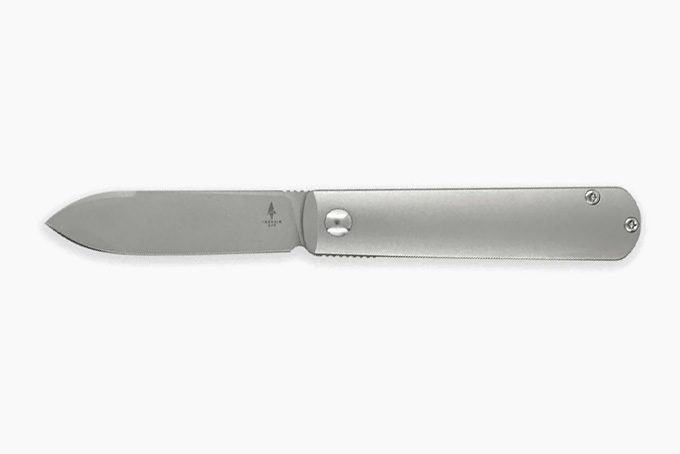
Terrain 365’s answer was to walk away from steel entirely. The aptly titled Otter is equipped with a blade cast from Terravantium, which is the brand’s proprietary dendritic cobalt superalloy. It features zero iron and zero carbon in the mix.
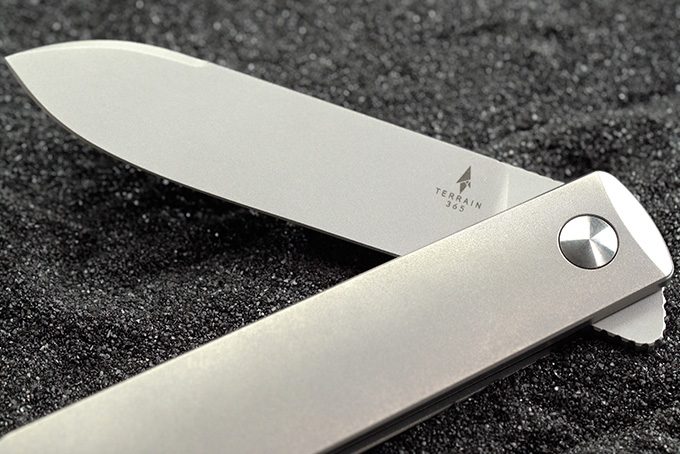
And that doesn’t just make it rust-resistant. It makes it rust-proof. It’s physically incapable of corroding, and non-magnetic on top of it.
This means you can open oysters with it, cut limes on a sailboat, or just forget it in a wet gym bag for a month. The dendritic structure keeps a toothy working edge, though when sharpening day comes you’ll want diamond stones, and we’ll say that we found edge retention to be good rather than great.
The “Slip Flip” mechanism is its own clever hybrid. There’s no lock and no traditional back spring, just a precision double detent that holds the blade open or closed, a flipper tab, and ceramic bearings.
You get modern one-handed deployment in a legally non-locking knife, plus a really nice fidget factor. But you have to respect it like any slip joint: no bearing down and no prying.
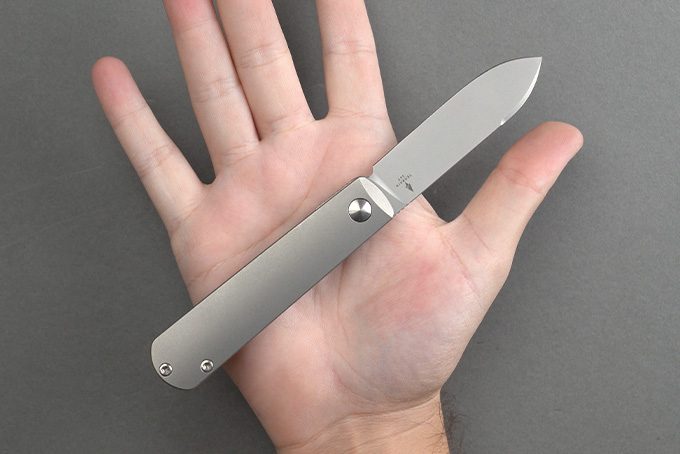
The build features contoured full-titanium slabs, a completely sterile blade, a milled titanium clip with no visible hardware, and all finished at a level we’d place just below Chris Reeve.
Three inches of friendly spear-point blade, 3.1 ounces, and it measures in at under seven inches overall.
At the $235 list price, you’re paying for that material science, but as we were working on this guide, the knife was hovering around $150, and that makes it a much easier decision.
Blade Length: 3.0″
Blade Steel: Terravantium Dendritic Cobalt
Overall Length: 6.94″
Weight: 3.1 oz
Lock Type: Non-Locking (Double Detent)
Benchmade Successor
Why It Made The Cut
- Benchmade surprise-dropped its first slip joint in years and flat-out nailed it, right down to the M390 blade and free lifetime sharpening.
Fans of Benchmade will probably remember the Proper. Introduced back in 2018, it was the only slip joint Benchmade made in its modern history. It was a rad little knife that we still own and absolutely love to this day. Unfortunately, Benchmade no longer makes the Proper, but last year, the brand dropped something that felt a bit like a follow-up.
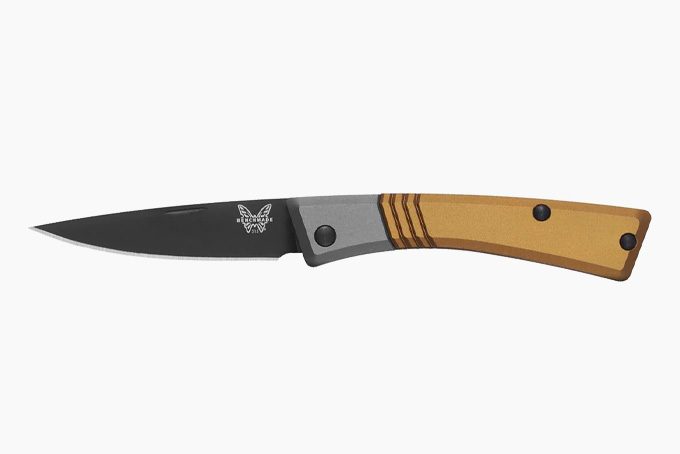
We’re talking about the Successor. It takes the traditional non-locker somewhere the Proper never really went, and fully modernized it for today’s landscape.
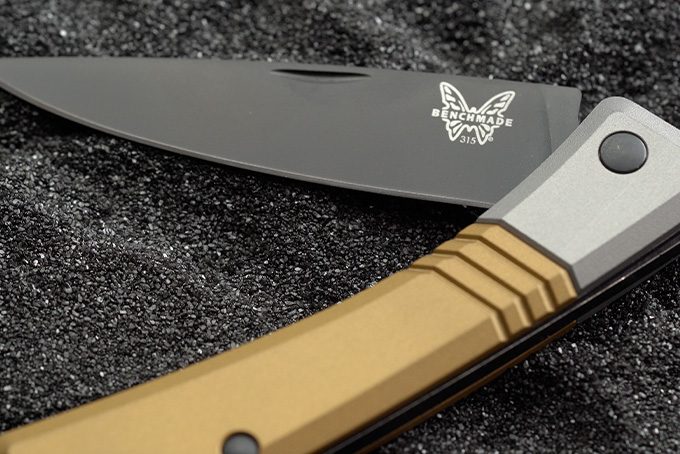
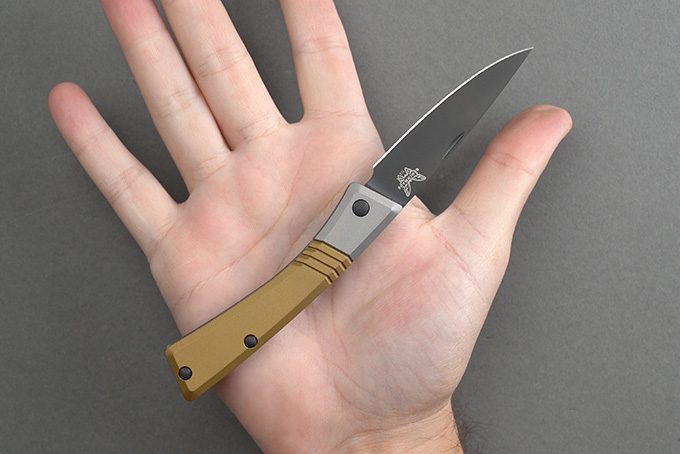
This burnt brass version is our favorite colorway. The 6061-T6 aluminum handle is anodized a deep bronze-gold with machined grooves stepping down the bolster, set against a blacked-out blade (proving blacked-out blades can still be gentlemanly). And you get that warm brass aesthetic our WESN Henry wears at just 2.28 ounces, which is a fraction of actual brass weight.
The blade is where Benchmade absolutely delivers. It’s a 2.56-inch drop point in Böhler M390 run to 58-61 HRC, the super steel whose hype trails only MagnaCut, and it holds a solid edge for months. The tip is needle-fine, perfect for scoring tape without plunging into the box.
The action might be the best part. There’s no lock, just a firm detent with a distinct half stop and walk-and-talk is absolutely flawless. It’s arguably one of the nicest feeling slip joints we’ve handled.
It also comes with a leather pocket sheath. And the clip is modular, riding on the sheath or sliding into a hidden slot on the knife itself for deep carry.
Of course, the knife is made Oregon City, USA, with a lifetime warranty and free LifeSharp sharpening forever. Yes, $250 is serious money for a non-locking knife, but Benchmade has always been on the higher end of the price spectrum, and we still think they’re some of the best made knives in the business.
Blade Length: 2.56″
Blade Steel: Böhler M390
Overall Length: 6.26″
Weight: 2.28 oz
Lock Type: Slip Joint (Non-Locking)
Tested: The 8 Best GADA Watches Under $1,000

Every good gentleman’s loadout needs a good knife, and hard wearing watch that can be worn in any scenario. We’ve got you covered with the best everyday watches you can buy on a budget.