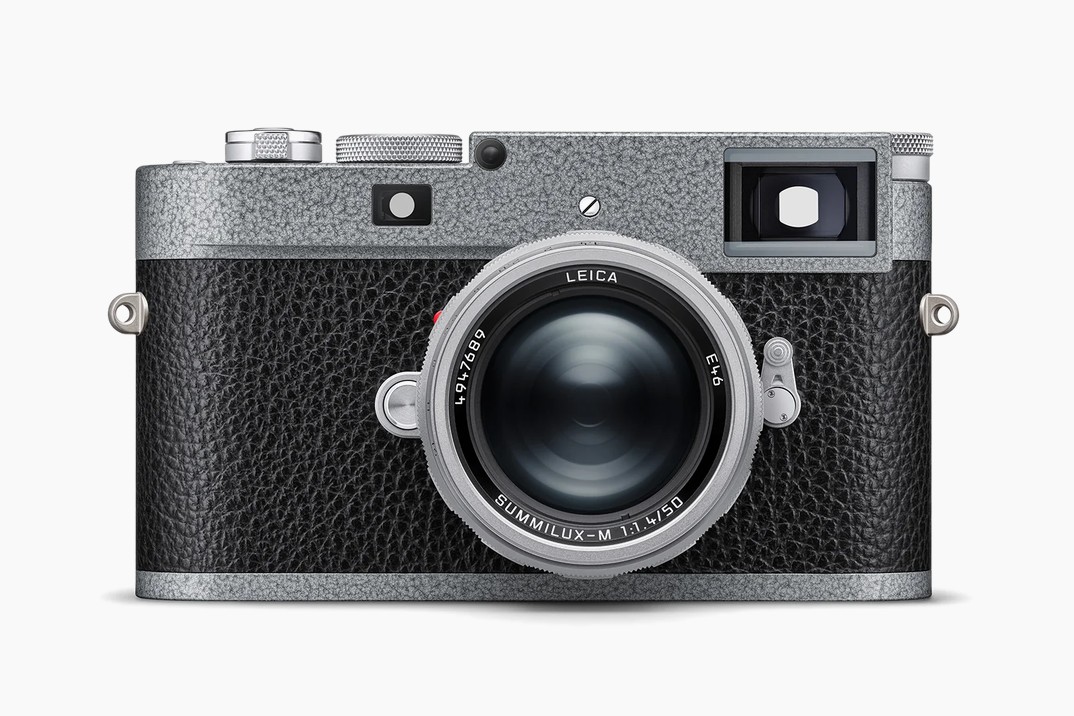

Back in June, Leica broke its century-long black-and-silver habit with a permanent Metal Gray finish. Admittedly, we figured that was the brand’s entire gray moment for 2026. Well, it turns out the brand was just getting warmed up.
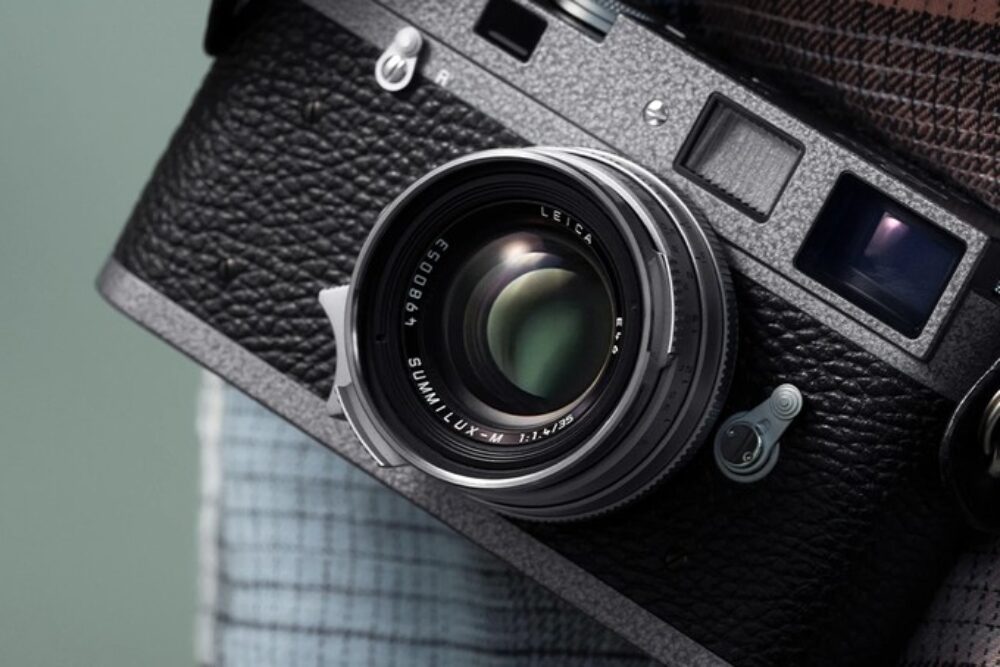
Leica has now pulled a much older, far more textured gray out of its own workshop history and applied it to both ends of the M lineup with the Leica M11-P Hammertone and Leica M-A Hammertone.
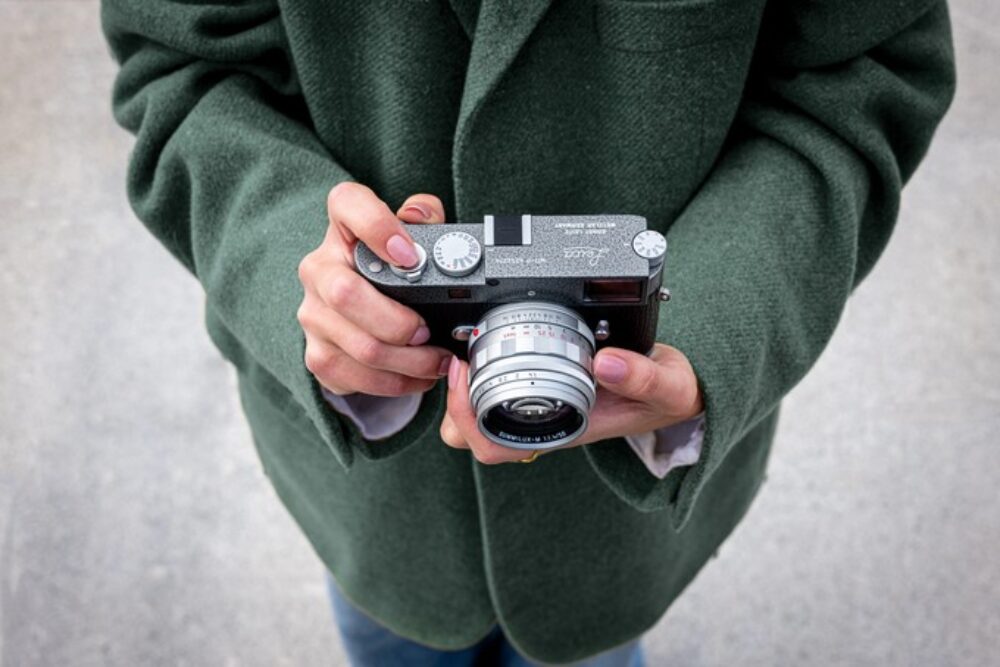
Lab Paint With a Pedigree
If hammertone looks like something off a piece of vintage lab gear, that’s because it basically is. Leitz used the dimpled finish on microscopes, slide projectors, and enlargers from the late 1950s onward. And it only rarely made it onto a camera, with the most famous example being the 1964 Leica MD Grey Hammertone (there are only 10 in existence).
Collectors have chased the handful of revivals ever since, from the 2003 MP LHSA to a 2016 M-A set for Leica’s Vienna store that later fetched €132,000 (~$155,000) at auction. This spring’s Ginza 20th-anniversary M-A was a 100-piece, Japan-only affair.
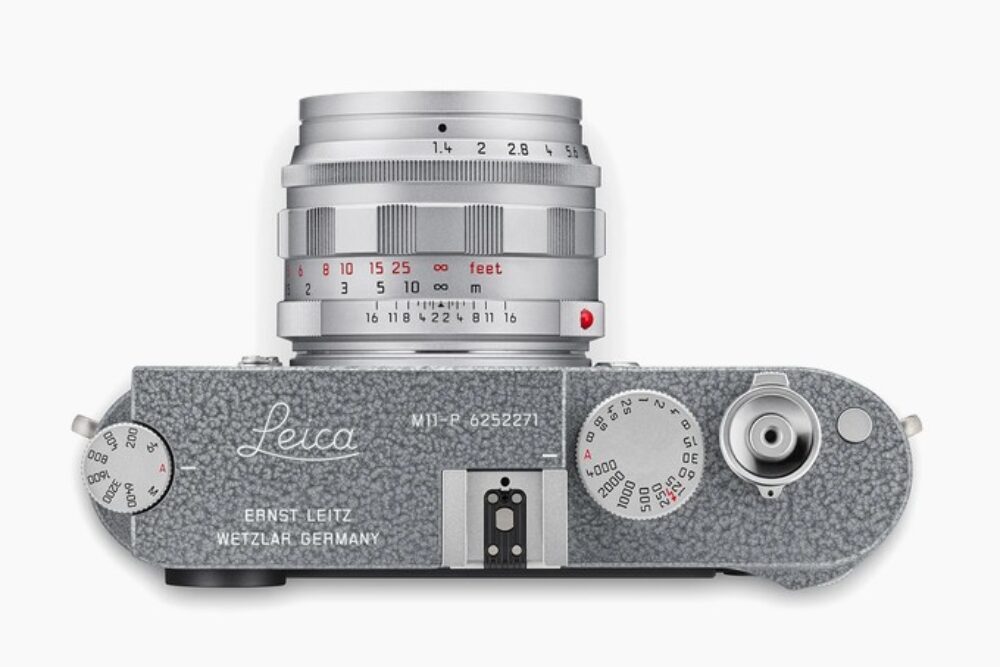
No Two Alike
Here’s the cool part. The texture forms on its own as the paint dries (with metallic pigments and additives doing the work), so Leica says no two cameras come out identical.
The Leica Manufacture team in Wetzlar reworked the process to keep things uniform, which is a funny goal for a finish whose whole charm is randomness. It covers the solid brass top and base plates, paired with black leatherette, white-filled engravings, cross-knurled controls, and a shiny silver shutter-release plate.
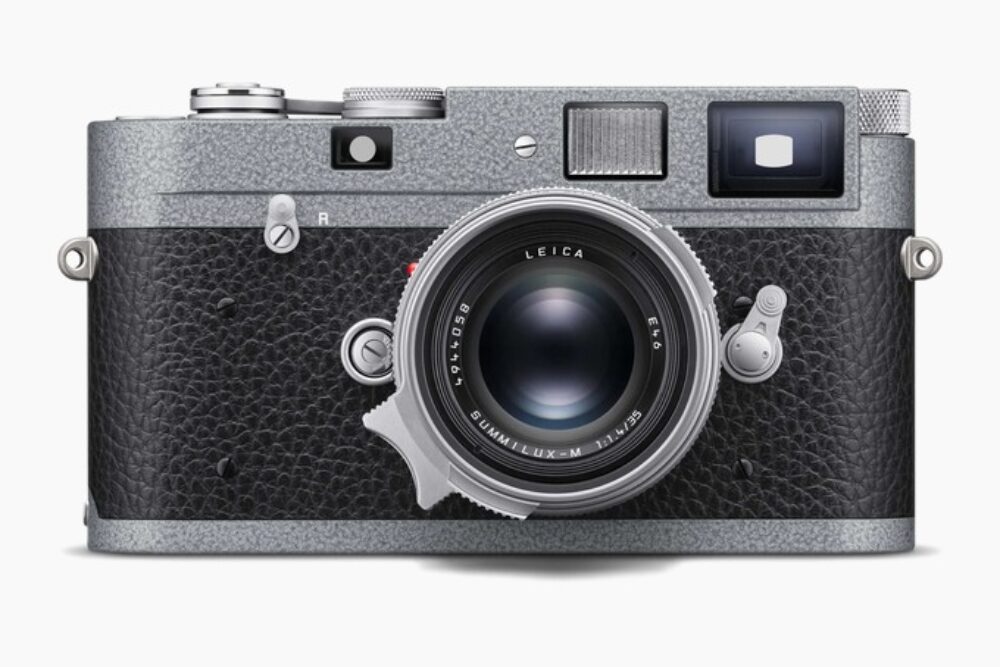
Film or 60 Megapixels
Nothing changes on the inside, so the choice is really about how you like to shoot. The M-A is as analog as Leica gets. It’s a fully mechanical film body with no battery and no light meter. It’s just you, a roll of film, and those dials.
The M11-P keeps its 60MP full-frame sensor, 256GB of built-in storage, sapphire-covered rear screen, and Content Credentials (the same photo-authentication tech we flagged on the SL3-P this summer). It also gets a few exclusive touches, including rounded plate edges, a matching hammertone battery, and a silver-chrome screw cover up front where June’s Metal Gray version wore a gray one.
Spec Sheet
Models: Leica M11-P Hammertone / Leica M-A Hammertone
Type: Digital rangefinder (M11-P) / Mechanical 35mm film rangefinder (M-A)
Sensor: 60MP full-frame BSI CMOS with Triple Resolution (M11-P)
Storage: 256GB internal + SD card slot (M11-P)
Screen: 2.95-inch sapphire touchscreen (M11-P)
ISO: 64 to 50,000 (M11-P)
Light Meter: None (M-A)
Finish: Hammertone brass top and base plates, black leatherette
Lens: Not included (body only)
Made In: Wetzlar, Germany
Limited Edition?: Special edition, no production number announced
Pricing & Availability
Both cameras are available now through Leica Stores, Leica’s online store, and authorized dealers, with the M-A Hammertone going for $8,000 and the M11-P Hammertone for $10,950, body only. Leica hasn’t attached a production number this time, so there’s no countdown clock, but special editions do tend to have an expiration date that comes quickly.
Recap
Leica M11-P Hammertone and M-A Hammertone
Leica dresses its 60MP M11-P and all-mechanical film M-A in a vintage hammertone gray where no two textured finishes come out the same.